the shadows behind solar panels production
Building Tools to Assess and Communicate the Social and Environmental Sustainability of Photovoltaic Supply Chains through the Case of GKN For Future
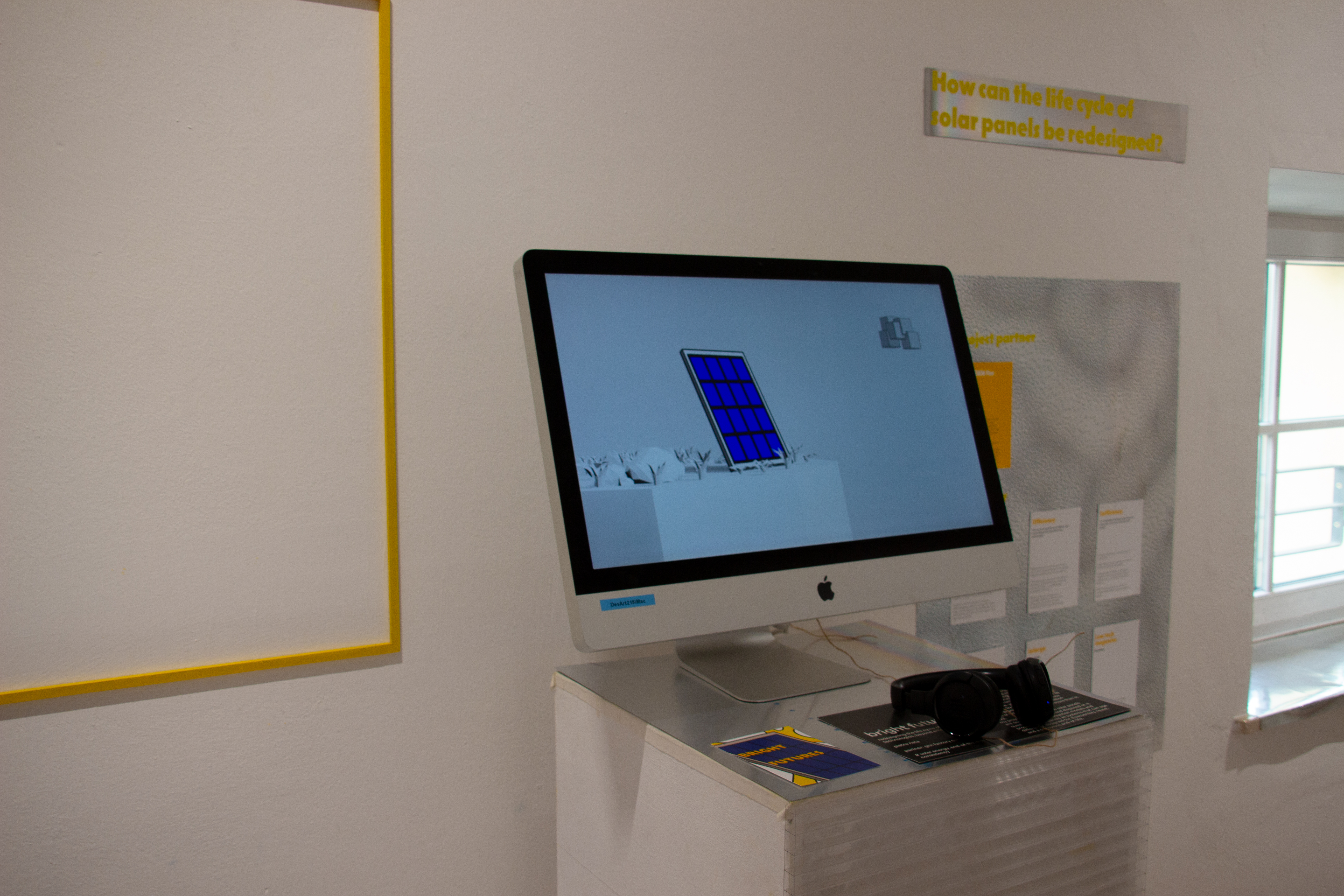
The rapid decline in photovoltaic module prices has accelerated renewable energy deployment across Europe, making solar power one of the most affordable energy sources available. However, the expansion of photovoltaic technologies has also been followed by a growing concentration of manufacturing outside Europe, increasing reliance on global supply chains and raising questions about transparency and the assessment of their social and environmental impacts.
This thesis explores the relationship between energy transition, reindustrialization, and supply-chain justice through the case of GKN For Future (GFF), a worker-led cooperative established after the closure of the GKN factory in Campi Bisenzio. Through a proposal based on photovoltaic production, installation and recycling, GFF represents an alternative model of industrial transition where labour rights, technological sovereignty, and ecological transition converge.
In collaboration with Eurac Research experts, the project develops a Life Cycle Assessment-based methodology to evaluate environmental and social criteria within PV supply chains. Combining stakeholder mapping and supply-chain analysis, the framework aims to support impact assessment and decision-making. Beyond assessment, the project investigates how design can bring together people with different forms of knowledge. Through facilitation, storytelling, visualization, digital and physical devices, it seeks to make the methodology and its findings understandable and transferable to other worker-led reindustrialization initiatives.
Contextual Review
Photovoltaic Sector in Europe
Photovoltaic (PV) technologies have become a cornerstone of the global energy transition. Over the last two decades, the dramatic reduction in PV module prices, largely enabled by the expansion of Chinese manufacturing capacity and industrial policy, has made solar energy one of the most affordable sources of electricity worldwide. At the same time, the geography of PV manufacturing has been profoundly reshaped. As production from the early 2000s to now has progressively concentrated in China, Europe became increasingly dependent on imported modules and components. This situation reveals a central challenge for the energy transition: although photovoltaic technologies have become increasingly widespread, the concentration of manufacturing outside Europe has strengthened dependence on complex global supply chains, whose social, environmental, and territorial impacts often remain difficult to assess and govern.